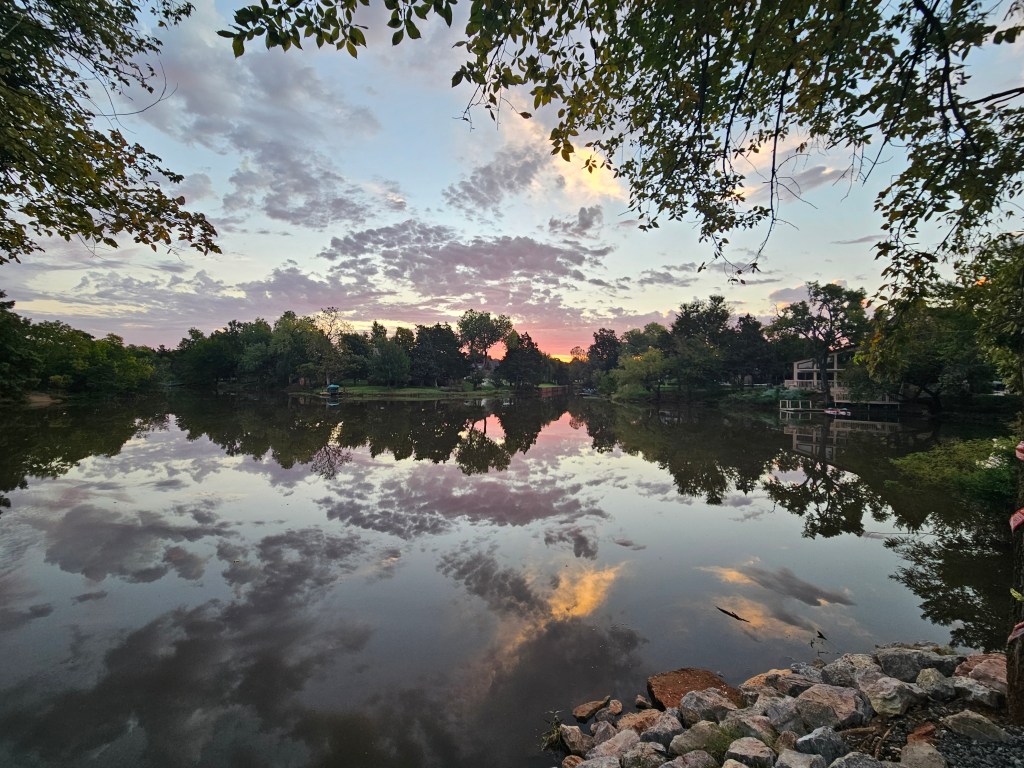
I never intended this. For a long time I couldn’t see the pattern, but I kept wondering why I had so much trouble making and keeping friends. I couldn’t understand why friendships ended in drama, and how I kept ending up in the same spot with different people. I blamed them completely, with little to no accountability, and only admitted I should have brought things up when they bothered me instead of going into a ‘fawn’ response when trouble arose. Then I blamed myself; I thought I was a narcissist, that I was a master manipulator, and that everything everyone said about me was true, but that didn’t add up either because I wanted to do good. I wanted to help, wanted people to not be in pain, wanted to fix everything. Finally, after therapy and lots of books, my therapist and I began to figure it out. I was trying to save people.
It started in Pre-K; I remember there was a little girl who cried every morning. I remember sitting with her, comforting her, letting her hold my Barney stuffy. I remember in grade school and highschool, I always sought out the lonely kid, the kid who smelled funny, the one who looked terrified, the one who seemed sad. I remember thinking, “I can cheer them up “ I can make them feel safe”, “I can make the fear go away”. And I could for a little while; I would dance around and be silly in pigtails and ribbons. You see, I had lots of training in reading emotions, bringing joy, and pleasing them. I was used to carrying others’ emotions and being responsible for other people’s emotional well-being. It’s cliché, but yes, my father is to blame. I spent the better part of my childhood trying to chase away his darkness, trying to make him happy, and thinking that my love would be enough to save him from his demons. The few times it did work, I was elated, high on a pink cloud, until his mood shifted and I was hurled back to earth. My love was not enough to save him; I couldn’t shine bright enough to chase his darkness away; I couldn’t save him. So I set out to save everyone else.
The beginning is always the same: I see who needs a friend, needs saving, needs help, then I decide I am going to be that friend. Then comes the trauma dump, one emotionally unhealthy person to another, sharing personal details and past trauma far too soon. The trauma bond forms; we each feel known, accepted, and understood, and we go up on pink clouds. They feel better temporarily, and I am high off the drug of being the remedy. For a little while, everything is golden; up on the pink clouds, we have lots of fun. There are no boundaries up in the clouds; call me day or night, I am there. Spend all your time venting to me about your parents, trauma, marriage, job, and hardships; I will listen like a therapist. Your life is too hard, and you have too much to do? Here, let me help; let me help you move; let me take on that job task; let me run to the store for you; let me watch your kid. You never felt important on your birthday? Then let me make a whole day about you; I will plan everything. Within a year, they will tell me that I am their best friend and that they have never had a friend like me. I will give them every ounce of myself and be devoted completely to them. I know what it is like to feel unloved, so I will do whatever it takes to make them feel loved. I will make promises, swearing to always be there for them; we plan our futures. Then reality will hit.
Eventually, a day will come when I will run dry; maybe it’s because of a job, maybe it’s my own trauma, maybe it’s a death in the family or another hard life event. I will come off the high of playing saviour. Sure, I will keep it up for a little while, pretending everything is fine, telling myself that if I fake it until I make it, waiting for those euphoric feelings to come back. I just need to keep pouring into them. I won’t tell them anything is wrong, hoping they don’t notice how artificial I have become. Then things will start to bother me; I will call needing support, and they won’t be available. I will expect them to be there for me the way I was for them; I want a return on my investment because that is how relationships work, right? Treat others the way YOU want to be treated; give and take. But the problem is I took on emotionally unhealthy people or people with an unstable home life, people who are broken and in pain, who are out of touch with their emotions and don’t have the capacity or knowledge of how to do what I do. I assume they feel what I feel, which is everything. Turns out I am the odd one; I am the different one. Not everyone feels that. As time goes on, more and more things begin to bother me: little comments and jokes. Little conflicts begin to arise; I get tired of everything being about them (even though I am the one who made it that way). Behaviors that I told them were okay now make me angry. But I will not give up on them; I will not leave them or stop loving them like all those other terrible people in their past. Slowly, I start to burn out with all the service; I get tired of planning everything. They don’t know what is happening, and all that trauma we bonded over begins to be the very thing tearing us apart. We start to fight, start to argue, resentment grows, and two emotionally unhealthy people hurt each other. Then my trauma response kicks in; I will want to flee and hide from them. Not out of anger, but because of overwhelming feelings I didn’t know how to talk about, I will go back and forth: one day everything is normal; the next I am distant and cold. Finally, when I can’t flee, I fawn; I do whatever it takes to please them while it slowly eats me alive. Then finally, when I am exhausted from feeling and fawning, I freeze.
One day I just stop; I freeze all my emotions. I can’t do it anymore, so I turn them off. I pretend everything is fine, move through the motions of friendship, my heart no longer in it. I become indifferent and distant; I withdraw so far into myself and put up so many walls that almost nothing gets through. That is usually the beginning of the end. Sometimes I was so determined not to leave; I was a coward and held on until she walked away. I was selfish, and even when the friendship was no longer good for either of us, I chose to stay. One friend said people always leave her, but I wouldn’t. One day she walked away, and I felt better about myself because I was not the one who quit. I got to play the victim in my own mind, focusing on all her faults. I prided myself on not venting to mutual friends about her, but I did vent to some friends outside our group. I needed to feel validated and superior, to tell how I tried to help and save her and she couldn’t be saved. Another one our friendship actually survived; she is one of the few who does feel everything as I do, and eventually we formed a healthier bond. But it took tears and a lot of angry words to get us to a healthier bond. With some, there was no dramatic finish, no conversation. Quietly, one day, I just fully disconnected from the relationship. I never told a few friends why; I just left. I didn’t know how to explain it to them, how to have that hard conversation. I didn’t want to cause them or myself more pain, and at the time, in my unhealthy mindset, I thought it would be easier if I just disappeared. So one day I did; I regret that and sometimes wonder if I should call those friends, but as more time goes on, the more I wonder if it’s best to just let them be.
If I could go back, I would do things differently; I would have healthier conversations sooner and start with better boundaries. I would handle conflicts more maturely. I did learn some between the first and the last, and mainly that the only people who need to hear about my conflicts with friends are my mom and my therapist. Even if I want validation and to be told I didn’t do anything wrong, I don’t listen to it; I call it for what it is, an unhealthy feeling that arises from my childhood trauma. But now that I have accepted that I am equally to blame in these friendships, I no longer have that desire. The truth is, I am just as broken and emotionally immature as the people I am trying to “save”. I realise I may have hurt them just as deeply as I felt they hurt me. I am the common denominator; I am the problem. I didn’t fully realize that I was living a lie and that while I am not a narcissist, I was love bombing people. I was trying to do the very thing they accused me of: to change them. I did have unspoken rules and standards in my mind that I held them to. I wasn’t a good friend to them; I wasn’t a safe or healthy person. I cannot blame them if they hate me. They deserved better.
I don’t like this about myself; it’s taken years of therapy and months to write this and truly accept my tendency to do this. Finally, I have been learning to see the pattern and how to help people without playing savior. Several new people have come into my life in the last few years whom I would have tried to save in the past, but I am learning to see the warning signs, to check my intentions, and to put up healthy boundaries to start with. I believe God has gifted me to seek out the lonely, the friendless, the hurting, but to offer companionship and to point them to Him. I am called to help meet the needs of others, but only within the capacity God has given me and where he has called me. I do have a gift to feel everything. To sense others’ emotions, but they are not my responsibility to fix. Yes, I enjoy making sad people smile or laugh, but their emotional well-being is not my burden to bear. If someone is determined to be in a bad mood, then I can pray and leave them to Jesus. Yes, I will listen; yes, I will offer wisdom where I can, but I don’t have to get involved with every 2 am spiral someone has.
Not all my relationships are like this; I have maintained a few friendships for almost a decade, but these were women who sought me out or whom I ended up bonding over a mutual hobby with, not people I sought to save. This is not to say these friendships are perfect with no conflicts, but on my end they have almost felt boring at times. Not because they are not life-giving and fun, but because they don’t have the intensity of the other kind. There is no roller coaster of emotions, no high of the pink clouds and no darkness of the lows. Sometimes I don’t know what to do with these friendships; I am so used to emotional turmoil from both my childhood and from unhealthy dynamics (often of my own making) in friendships that the peace and consistency can feel weird at times. To not have relationships formed on talking about other people or built on childhood trauma bonding. It took me a long time to learn that emotionally healthy people do not consistently gossip; no one is perfect, and we all slip up every now and then, but healthy people consistently avoid it. A few years ago, I made a commitment to myself to not keep making the same mistakes, and one of those was to not talk poorly of former friends. I used to think that the friendship had ended; it was okay to talk about them now, but now, seeing how bad of a friend I was, I cannot talk badly of them because I don’t have anything bad to say. They may have hurt me, but I also hurt them. So I carry their secrets and wish them the best.
I have debated sharing this; I have edited this piece many times. It doesn’t paint me in a very good light. Learning these lessons has been a hard pill to swallow. Seeing how I twisted my gifts into something unhealthy. But writing it out makes it real; it brings it into the light. It helps me hold myself accountable because I want to do better. The writing helps me process it and move forward. Each one of these friendships is now bittersweet; there were moments of genuine friendship, moments that I will treasure. Memories that I will hold on to, lessons each one of these women taught me. I hope they find people who let them be themselves, who, yes, help them grow and heal, but on the timeline that is meant for them. I hope they grow and flourish in the way God created them to be. I pray God heals any damage I did between the pink clouds and the hard ground. The next step for me is to learn to forgive myself, to accept my part and my role and the damage to the friendship I know I caused, and continue to learn from it. This is the final reason for this piece of writing: to mark this moment, this season, this time as a full turning point, as a commitment to myself and to any future friends to never try to save anyone again.
“I hope you realized my kind of trouble wasn’t worth it
And the way I treated you, you never deserved it
And I swear to God, to this day
I wake up scared that I left scars on a good person
Years later, I still wonder how to tell you sorry
I hope you landed safely on the ground, hey (Pink cloud, pink cloud)
And I hope you’re so happy now (Pink cloud, pink cloud)”- TS
If someone had told me a few years ago that I had a saviour complex, I would have told them they were wrong. In fact, I may have at some point. I would have denied it, said it wasn’t true, and argued. It’s not easy to admit I had ulterior motives or that I was the common denominator in my broken friendships. You see, I have a pattern of wanting to fix broken things, rescue people, and take their pain on as my own. I find the broken, the lonely, the hurting, and I want to make it better. While not inherently bad, the harm comes when I try to sell myself as the remedy. I have a bad habit of giving every fiber of my being to make it better, pouring all my emotional and mental energy into it. I channel all my love into them, thinking that if I love them a little harder and give them more, the pain will go away. I think that if I give all my joy and sunshine, it can push away the darkness that plagues them. The problem is I am not a savior; I don’t have endless empathy, love, and light. Eventually, I run out.
I never intended this. For a long time I couldn’t see the pattern, but I kept wondering why I had so much trouble making and keeping friends. I couldn’t understand why friendships ended in drama, and how I kept ending up in the same spot with different people. I blamed them completely, with little to no accountability, and only admitted I should have brought things up when they bothered me instead of going into a ‘fawn’ response when trouble arose. Then I blamed myself; I thought I was a narcissist, that I was a master manipulator, and that everything everyone said about me was true, but that didn’t add up either because I wanted to do good. I wanted to help, wanted people to not be in pain, wanted to fix everything. Finally, after therapy and lots of books, my therapist and I began to figure it out. I was trying to save people.
It started in Pre-K; I remember there was a little girl who cried every morning. I remember sitting with her, comforting her, letting her hold my Barney stuffy. I remember in grade school and highschool, I always sought out the lonely kid, the kid who smelled funny, the one who looked terrified, the one who seemed sad. I remember thinking, “I can cheer them up “ I can make them feel safe”, “I can make the fear go away”. And I could for a little while; I would dance around and be silly in pigtails and ribbons. You see, I had lots of training in reading emotions, bringing joy, and pleasing them. I was used to carrying others’ emotions and being responsible for other people’s emotional well-being. It’s cliché, but yes, my father is to blame. I spent the better part of my childhood trying to chase away his darkness, trying to make him happy, and thinking that my love would be enough to save him from his demons. The few times it did work, I was elated, high on a pink cloud, until his mood shifted and I was hurled back to earth. My love was not enough to save him; I couldn’t shine bright enough to chase his darkness away; I couldn’t save him. So I set out to save everyone else.
The beginning is always the same: I see who needs a friend, needs saving, needs help, then I decide I am going to be that friend. Then comes the trauma dump, one emotionally unhealthy person to another, sharing personal details and past trauma far too soon. The trauma bond forms; we each feel known, accepted, and understood, and we go up on pink clouds. They feel better temporarily, and I am high off the drug of being the remedy. For a little while, everything is golden; up on the pink clouds, we have lots of fun. There are no boundaries up in the clouds; call me day or night, I am there. Spend all your time venting to me about your parents, trauma, marriage, job, and hardships; I will listen like a therapist. Your life is too hard, and you have too much to do? Here, let me help; let me help you move; let me take on that job task; let me run to the store for you; let me watch your kid. You never felt important on your birthday? Then let me make a whole day about you; I will plan everything. Within a year, they will tell me that I am their best friend and that they have never had a friend like me. I will give them every ounce of myself and be devoted completely to them. I know what it is like to feel unloved, so I will do whatever it takes to make them feel loved. I will make promises, swearing to always be there for them; we plan our futures. Then reality will hit.
Eventually, a day will come when I will run dry; maybe it’s because of a job, maybe it’s my own trauma, maybe it’s a death in the family or another hard life event. I will come off the high of playing saviour. Sure, I will keep it up for a little while, pretending everything is fine, telling myself that if I fake it until I make it, waiting for those euphoric feelings to come back. I just need to keep pouring into them. I won’t tell them anything is wrong, hoping they don’t notice how artificial I have become. Then things will start to bother me; I will call needing support, and they won’t be available. I will expect them to be there for me the way I was for them; I want a return on my investment because that is how relationships work, right? Treat others the way YOU want to be treated; give and take. But the problem is I took on emotionally unhealthy people or people with an unstable home life, people who are broken and in pain, who are out of touch with their emotions and don’t have the capacity or knowledge of how to do what I do. I assume they feel what I feel, which is everything. Turns out I am the odd one; I am the different one. Not everyone feels that. As time goes on, more and more things begin to bother me: little comments and jokes. Little conflicts begin to arise; I get tired of everything being about them (even though I am the one who made it that way). Behaviors that I told them were okay now make me angry. But I will not give up on them; I will not leave them or stop loving them like all those other terrible people in their past. Slowly, I start to burn out with all the service; I get tired of planning everything. They don’t know what is happening, and all that trauma we bonded over begins to be the very thing tearing us apart. We start to fight, start to argue, resentment grows, and two emotionally unhealthy people hurt each other. Then my trauma response kicks in; I will want to flee and hide from them. Not out of anger, but because of overwhelming feelings I didn’t know how to talk about, I will go back and forth: one day everything is normal; the next I am distant and cold. Finally, when I can’t flee, I fawn; I do whatever it takes to please them while it slowly eats me alive. Then finally, when I am exhausted from feeling and fawning, I freeze.
One day I just stop; I freeze all my emotions. I can’t do it anymore, so I turn them off. I pretend everything is fine, move through the motions of friendship, my heart no longer in it. I become indifferent and distant; I withdraw so far into myself and put up so many walls that almost nothing gets through. That is usually the beginning of the end. Sometimes I was so determined not to leave; I was a coward and held on until she walked away. I was selfish, and even when the friendship was no longer good for either of us, I chose to stay. One friend said people always leave her, but I wouldn’t. One day she walked away, and I felt better about myself because I was not the one who quit. I got to play the victim in my own mind, focusing on all her faults. I prided myself on not venting to mutual friends about her, but I did vent to some friends outside our group. I needed to feel validated and superior, to tell how I tried to help and save her and she couldn’t be saved. Another one our friendship actually survived; she is one of the few who does feel everything as I do, and eventually we formed a healthier bond. But it took tears and a lot of angry words to get us to a healthier bond. With some, there was no dramatic finish, no conversation. Quietly, one day, I just fully disconnected from the relationship. I never told a few friends why; I just left. I didn’t know how to explain it to them, how to have that hard conversation. I didn’t want to cause them or myself more pain, and at the time, in my unhealthy mindset, I thought it would be easier if I just disappeared. So one day I did; I regret that and sometimes wonder if I should call those friends, but as more time goes on, the more I wonder if it’s best to just let them be.
If I could go back, I would do things differently; I would have healthier conversations sooner and start with better boundaries. I would handle conflicts more maturely. I did learn some between the first and the last, and mainly that the only people who need to hear about my conflicts with friends are my mom and my therapist. Even if I want validation and to be told I didn’t do anything wrong, I don’t listen to it; I call it for what it is, an unhealthy feeling that arises from my childhood trauma. But now that I have accepted that I am equally to blame in these friendships, I no longer have that desire. The truth is, I am just as broken and emotionally immature as the people I am trying to “save”. I realise I may have hurt them just as deeply as I felt they hurt me. I am the common denominator; I am the problem. I didn’t fully realize that I was living a lie and that while I am not a narcissist, I was love bombing people. I was trying to do the very thing they accused me of: to change them. I did have unspoken rules and standards in my mind that I held them to. I wasn’t a good friend to them; I wasn’t a safe or healthy person. I cannot blame them if they hate me. They deserved better.
I don’t like this about myself; it’s taken years of therapy and months to write this and truly accept my tendency to do this. Finally, I have been learning to see the pattern and how to help people without playing savior. Several new people have come into my life in the last few years whom I would have tried to save in the past, but I am learning to see the warning signs, to check my intentions, and to put up healthy boundaries to start with. I believe God has gifted me to seek out the lonely, the friendless, the hurting, but to offer companionship and to point them to Him. I am called to help meet the needs of others, but only within the capacity God has given me and where he has called me. I do have a gift to feel everything. To sense others’ emotions, but they are not my responsibility to fix. Yes, I enjoy making sad people smile or laugh, but their emotional well-being is not my burden to bear. If someone is determined to be in a bad mood, then I can pray and leave them to Jesus. Yes, I will listen; yes, I will offer wisdom where I can, but I don’t have to get involved with every 2 am spiral someone has.
Not all my relationships are like this; I have maintained a few friendships for almost a decade, but these were women who sought me out or whom I ended up bonding over a mutual hobby with, not people I sought to save. This is not to say these friendships are perfect with no conflicts, but on my end they have almost felt boring at times. Not because they are not life-giving and fun, but because they don’t have the intensity of the other kind. There is no roller coaster of emotions, no high of the pink clouds and no darkness of the lows. Sometimes I don’t know what to do with these friendships; I am so used to emotional turmoil from both my childhood and from unhealthy dynamics (often of my own making) in friendships that the peace and consistency can feel weird at times. To not have relationships formed on talking about other people or built on childhood trauma bonding. It took me a long time to learn that emotionally healthy people do not consistently gossip; no one is perfect, and we all slip up every now and then, but healthy people consistently avoid it. A few years ago, I made a commitment to myself to not keep making the same mistakes, and one of those was to not talk poorly of former friends. I used to think that the friendship had ended; it was okay to talk about them now, but now, seeing how bad of a friend I was, I cannot talk badly of them because I don’t have anything bad to say. They may have hurt me, but I also hurt them. So I carry their secrets and wish them the best.
I have debated sharing this; I have edited this piece many times. It doesn’t paint me in a very good light. Learning these lessons has been a hard pill to swallow. Seeing how I twisted my gifts into something unhealthy. But writing it out makes it real; it brings it into the light. It helps me hold myself accountable because I want to do better. The writing helps me process it and move forward. Each one of these friendships is now bittersweet; there were moments of genuine friendship, moments that I will treasure. Memories that I will hold on to, lessons each one of these women taught me. I hope they find people who let them be themselves, who, yes, help them grow and heal, but on the timeline that is meant for them. I hope they grow and flourish in the way God created them to be. I pray God heals any damage I did between the pink clouds and the hard ground. The next step for me is to learn to forgive myself, to accept my part and my role and the damage to the friendship I know I caused, and continue to learn from it. This is the final reason for this piece of writing: to mark this moment, this season, this time as a full turning point, as a commitment to myself and to any future friends to never try to save anyone again.
“I hope you realized my kind of trouble wasn’t worth it
And the way I treated you, you never deserved it
And I swear to God, to this day
I wake up scared that I left scars on a good person
Years later, I still wonder how to tell you sorry
I hope you landed safely on the ground, hey (Pink cloud, pink cloud)
And I hope you’re so happy now (Pink cloud, pink cloud)”- TS

Leave a Reply